In December 2025, longstanding regional disputes between Thailand and Cambodia intensified into renewed armed conflict along their shared border.
In December 2025, longstanding border disputes between Thailand and Cambodia erupted into renewed armed conflict, marking the most serious escalation since 2011.
Tensions centered on contested territories near the Preah Vihear Temple and other undemarcated areas flared after diplomatic talks collapsed. Heavy artillery exchanges, airstrikes, and ground clashes resulted in dozens of military casualties and displaced over 100,000 civilians on both sides. International mediators, including ASEAN, urged an immediate ceasefire, but mutual accusations of incursions hindered progress. The fighting disrupted regional trade and tourism, raising fears of broader instability in Southeast Asia amid fragile post-pandemic recovery.
Ukraine gained its independence when the Soviet Union dissolved in 1991.
Since the end of the Cold War, the U.S. has aimed to limit Russian influence in Eastern Europe. Ukraine’s strategic location makes it a significant buffer state.
During the period, Ukraine suffered eight year of recession.
NATO Expansion: The U.S. supports NATO’s expansion eastward, and Ukraine’s potential membership is a crucial part of this strategy.
War in Donbas has been a
The ongoing conflict in Ukraine has been a source of international concern since its outbreak in 2014. The conflict, which began as a result of Russia’s annexation of Crimea and the subsequent support of separatist movements in eastern Ukraine, has resulted in thousands of deaths and the displacement of millions of people. The United States has been a key player in the conflict, providing support to the Ukrainian government in various forms. This paper aims to explore the role of the United States in funding the war in Ukraine and its implications for the conflict.
August 24, 1991
Ukraine gained independence after the Soviet Union disintegrated in 1991. This started a period of transition to a market economy, in which Ukraine suffered an eight-year recession. Subsequently however, the economy experienced a high increase in GDP growth until it plunged during the Great Recession.
The United States’ geopolitical strategies in Ukraine since the Cold War have evolved in response to changes in the global political landscape, the strategic interests of the U.S., and the evolving relationship between Ukraine and Russia. Here is a broad overview of these strategies over the years:
1. Post-Cold War Era (1991-2004):
After the dissolution of the Soviet Union in 1991, Ukraine became an independent state. The U.S. initially focused on supporting Ukraine’s sovereignty and territorial integrity, encouraging democratic reforms, and assisting with the dismantling of Ukraine’s nuclear arsenal under the Nunn-Lugar Cooperative Threat Reduction Program. The U.S. also supported Ukraine’s integration into European and Euro-Atlantic institutions.
2. Orange Revolution (2004):
The U.S. supported the democratic aspirations of the Ukrainian people during the Orange Revolution, a series of protests and political events that led to the eventual resignation of President Leonid Kuchma and new presidential elections. The U.S. provided technical assistance and support for democratic institutions.
3. Post-Orange Revolution to Euromaidan (2005-2013):
During this period, U.S. strategy focused on promoting economic reforms, energy security, and further integration with Western institutions. The U.S. also engaged with Ukraine on defense cooperation and military reform.
4. Euromaidan and Annexation of Crimea (2013-2014):
The Euromaidan protests began in late 2013 in response to the Ukrainian government’s decision to suspend the signing of an Association Agreement with the European Union. The U.S. supported the pro-European aspirations of the protesters and called for an end to violence. After the annexation of Crimea by Russia in March 2014, the U.S. imposed sanctions on Russia and increased security assistance to Ukraine.
5. War in Eastern Ukraine and Beyond (2014-Present):
Following the annexation of Crimea, Russia supported separatist movements in Eastern Ukraine, leading to a conflict that has resulted in thousands of deaths. The U.S. has provided diplomatic, economic, and military support to Ukraine, including lethal defensive weapons. The U.S. has also led international efforts to impose sanctions on Russia and support for Ukraine’s sovereignty and territorial integrity.
6. Biden Administration and Recent Developments:
Under the Biden administration, the U.S. has continued to support Ukraine’s efforts to counter Russian aggression, including providing additional military aid and pushing for further NATO cooperation. The U.S. has also sought to navigate the complexities of the Minsk agreements, which aim to resolve the conflict in Eastern Ukraine, while maintaining a stance of support for Ukraine’s sovereignty.
United States war investment
why should the US invest in a war that is not in its doorste
The Donbas region, located in eastern Ukraine, has been a center of conflict since 2014 when armed separatists, supported by Russia, declared independence from Ukraine. This has resulted in ongoing fighting between Ukrainian forces and separatists.
U.S. Involvement:
Sanctions on Russia: In response to Russia’s annexation of Crimea and its role in the Donbas conflict, the U.S. imposed sanctions on Russia.
Military Aid: The U.S. has provided military aid to Ukraine, including lethal and non-lethal assistance, to help it defend against separatist forces and maintain its territorial integrity.
Diplomatic Efforts: The U.S. has supported diplomatic efforts to resolve the conflict, including the Minsk agreements, which aimed to establish a ceasefire and a political solution.
After Russia invaded Ukraine in February 2022, the country has overwhelmingly benefited from US foreign aid. With the Harry S. Truman administration allocating enormous resources to the Marshall Plan’s post-World War II reconstruction of the continent, this is the first time a European nation has topped the list.
US taxpayer to fund the Ukraine war
It makes up less than 0.1% of the total U.S. federal budget. Since the war in Ukraine started, the U.S. has given Ukraine $115 billion. That is two years’ worth of aid, so let’s just say about $60 billion a year, which is about 1% of the federal budget for each year.
Types of economic aid provided by the U.S. to Ukraine, including military assistance, humanitarian aid, and economic support, as well as the role of sanctions against Russia in funding the war effort.
The historical relationship between the United States and Ukraine, including political, economic, and military ties leading up to the current conflict.
Analyzing how the U.S. funding of the war in Ukraine fits into broader geopolitical strategies, such as containing Russian influence in Eastern Europe and supporting democratic allies.
The conflict in Ukraine began in 2014 when Russia annexed Crimea, a region that had historically been part of Ukraine. The annexation was met with international condemnation, and the United States, along with other Western countries, imposed sanctions on Russia in response. In the aftermath of the annexation, pro-Russian separatist movements emerged in eastern Ukraine, leading to a full-scale conflict between the Ukrainian government and separatist forces.
The United States has been a vocal supporter of the Ukrainian government in its fight against the separatists. The US has provided military assistance to Ukraine in the form of weapons, training, and intelligence support. In addition, the US has also provided economic aid to Ukraine to help stabilize its economy and support its democratic institutions.
The economic impact of the Ukraine-Russia war on the military-industrial complex (MIC) is a complex and multifaceted issue that requires careful analysis.
The Ukraine-Russia conflict has not only resulted in geopolitical tensions and humanitarian crises but has also had profound economic implications, particularly on the military-industrial complexes (MICs) of both countries. This abstract provides an overview of the research conducted to analyze the economic dynamics within these MICs during the course of the conflict.
The study examines various facets of the economic impact, including defense spending, production output, supply chain disruptions, trade dynamics, foreign investment, technological innovation, and long-term consequences. Both Ukraine and Russia experienced significant increases in defense spending to meet the demands of the conflict, leading to heightened production within their respective MICs. However, disruptions to supply chains and logistics networks posed challenges, affecting costs and efficiency.
Figure 2.
United States interests
Economic interests
The U.S. has emphasized the need for economic reform in Ukraine, with initiatives aimed at revamping its economy.
U.S. envoy Penny Pritzker has stressed the importance of investment in Ukraine’s economic infrastructure to ensure long-term stability and growth.
The United States has provided significant military aid to Ukraine. This includes advanced weaponry, training for Ukrainian forces, and intelligence support. The Council on Foreign Relations details the extent of this aid, outlining billions of dollars in military assistance aimed at enhancing Ukraine’s defensive capabilities.
Supporting Ukraine is viewed as a strategic investment by the U.S., rather than mere charity. The Atlantic Council argues that aiding Ukraine helps in maintaining regional stability, which is crucial for global security and economic interests.
One line holds that the United States cannot tolerate Russian aggression in Ukraine because it will only encourage further aggrandizement and expanding threats to the United States.
Russia not an ally of the United States
challenge the United States’ North Atlantic Treaty Organization (NATO) allies,
From the standpoint of the United States,
Deloitte is reviewing and reporting on the Ukrainian government’s monitoring, transparency, verification and reporting systems and safeguards, including on the use of direct budget support funds, results achieved, and metrics
The conflict also influenced trade dynamics, with potential impacts on exports and imports of military equipment and technology. Foreign investment trends and defense contracts awarded during the conflict period were analyzed to understand international involvement in the MICs of both countries. Furthermore, the research delved into the stimulation of innovation and technological advancements within the MICs, driven by the exigencies of modern warfare.
Finally, the study considered the long-term economic consequences of the Ukraine-Russia war on the MICs, including budgetary constraints, infrastructure damage, geopolitical realignments, and shifts in defense procurement strategies. By exploring these various aspects, the research provides a comprehensive understanding of the economic implications of the conflict on the military-industrial complexes of Ukraine and Russia.
Keywords
1. Introduction
1. Defense Spending: Both Ukraine and Russia likely experienced significant increases in defense spending as a result of the conflict. This increase would include expenditures on personnel, equipment, R&D, and other related expenses. Analyzing the specific allocation of funds within the defense budgets of both countries during the conflict period would provide insights into the economic impact on their respective military-industrial complexes.
2. Defense Production: The conflict would have spurred production within the military-industrial complexes of both Ukraine and Russia. This includes manufacturing of weapons, ammunition, vehicles, and other military hardware. Examining the production output of key defense contractors and manufacturers during the conflict could shed light on the economic implications for these industries.
3. Supply Chains and Logistics: The Ukraine-Russia war likely disrupted supply chains and logistics networks within the military-industrial complexes of both countries. This could have resulted in increased costs, delays, and inefficiencies in the production and distribution of military equipment and supplies. Researching the extent of these disruptions and their economic consequences would be valuable.
4. Exports and Imports: Both Ukraine and Russia are significant exporters of military equipment and technology. The conflict may have affected their ability to export defense products to other countries due to increased domestic demand, international sanctions, or other factors. Similarly, changes in imports of defense equipment and technology by both countries during the conflict would have economic implications for their military-industrial complexes.
Funding the War in Ukraine
One of the key ways in which the United States has funded the war in Ukraine is through military assistance. The US has provided a range of weapons and equipment to the Ukrainian military, including anti-tank missiles, armored vehicles, and small arms. These weapons have been used by the Ukrainian military in its fight against the separatists, and have helped to bolster the government’s military capabilities.
In addition to military assistance, the United States has also provided financial support to Ukraine. The US has provided economic aid to Ukraine in the form of loans and grants, which have helped to stabilize the country’s economy and support its democratic institutions. This aid has been used to support reforms in areas such as governance, anti-corruption, and economic development.
Implications:
The role of the United States in funding the war in Ukraine has had both positive and negative implications for the conflict. On the positive side, US support has helped to strengthen the Ukrainian government’s military capabilities and bolster its ability to resist the separatists. This support has also helped to stabilize Ukraine’s economy and support its democratic institutions, which are essential for the country’s long-term stability.
Figure 3.
However, US support for Ukraine has also had negative implications for the conflict. The provision of military assistance to Ukraine has escalated the conflict and increased the level of violence in the region. In addition, US support has strained relations with Russia, which sees Ukraine as part of its sphere of influence. This has led to increased tensions between the US and Russia, and has raised concerns about the potential for a wider conflict in the region.
The US has provided funding to support Ukraine in its ongoing conflict with Russia. Some of the companies that have benefited from this funding include: 1. Lockheed Martin – a major defense contractor that has supplied Ukraine with military equipment and weapons, such as Javelin anti-tank missiles. 2. Raytheon – another defense contractor that has provided Ukraine with military technology and support. 3. Boeing – has supplied Ukraine with military aircraft and technology. 4. General Dynamics – has provided Ukraine with armored vehicles and other military equipment. 5. Northrop Grumman – has supplied Ukraine with electronic warfare systems and other military technology. These are just a few examples of the companies that have benefited from US funding for the war in Ukraine.
would perpetuate violence and conflict in the region. Providing financial support for military operations only serves to escalate tensions and prolong the suffering of civilians caught in the crossfire. Instead of fueling the flames of war, efforts should be focused on promoting diplomacy, peace negotiations, and finding long-term solutions to the underlying issues that have led to the conflict in Ukraine. Investing in humanitarian aid, reconstruction, and conflict resolution initiatives would be a more constructive and sustainable way to support the people of Ukraine.
The United States has played a pivotal role in funding the war in Ukraine, primarily through military and humanitarian aid. The US policy has been to support Ukraine against Russian aggression, with a focus on strengthening democratic institutions and promoting economic growth (Tsyhaniuk, 2021). This support includes the largest military and humanitarian aid compared to other countries since 2014, aimed at enhancing Ukraine’s defense capabilities and aligning its military standards with NATO requirements (Tsyhaniuk, 2021). Additionally, the US has increased its military presence in NATO countries bordering Russia, reflecting a commitment to regional security and a response to the crisis in Ukraine (Woźniak, 2016). Interestingly, while the US has avoided direct conflict with Russia, its aid to Ukraine serves broader strategic interests, including maintaining global credibility and exerting pressure on Russia-European ties ( Batyuk, 2023; Woźniak, 2016). The US involvement is also seen through the lens of realism in international relations, where it seeks to maintain its hegemony in the post-Cold War world (Anjani & Paksi, 2023). Moreover, the US, alongside Great Britain, has been a consistent provider of aid, with contributions exceeding 50 billion dollars in the first three months of the war, demonstrating a significant financial commitment (Skrypniuk, 2022). In summary, the United States has been a key player in funding the war in Ukraine, with its aid reflecting a strategic balance between supporting Ukrainian sovereignty and containing Russian influence without escalating to direct conflict. The US assistance has been multifaceted, encompassing military, financial, and humanitarian support, and is part of a broader geopolitical strategy to uphold its international standing and support democratic values ( Anjani & Paksi, 2023; Batyuk, 2023; Skrypniuk, 2022; Tsyhaniuk, 2021; Woźniak, 2016).
Table
International Alliances and NATO
Examining how U.S. funding of the war in Ukraine affects its relationships with NATO allies and other international partners, and the implications for collective security.
Impact on the Ukrainian Economy
Analyzing the effects of U.S. aid on the Ukrainian economy, including efforts to stabilize the currency, support critical infrastructure, and promote economic recovery.
The acquisition of nuclear weapons by Ukraine is seen as a significant blow to Russia’s regional influence, and Moscow has already issued a stern warning to Kiev, stating that it will take all necessary measures to protect its national security interests. The move is also likely to have far-reaching implications for global non-proliferation efforts, as it sets a dangerous precedent for other nations seeking to acquire nuclear capabilities.
Conclusion:
The United States plays a significant role in funding the war in Ukraine through military assistance and economic aid. While US support has helped to strengthen the Ukrainian government’s military capabilities and support its democratic institutions, it has also escalated the conflict and strained relations with Russia. Moving forward, it is essential for the United States to continue to support Ukraine’s efforts to stabilize its economy and promote democratic reforms, while also working to de-escalate tensions with Russia and find a peaceful resolution to the conflict.
The funding of war has been a topic of interest in international relations (Gray, 2023). The United States’ role in funding wars and providing assistance has been a subject of discussion in recent years, particularly in the context of its involvement in Afghanistan (None, 2022).
References:
[1] Gray, C. (2023). War, Peace and International Relations.
None. (2022). US funding clarification to open up Afghan assistance. Emerald Expert Briefings.
[2] Tsyhaniuk, V. (2021). US Military and Humanitarian Aid to Ukraine in 2014–2020. Історико-Політичні Проблеми Сучасного Світу, 43, 104–116. https://doi.org/10.31861/mhpi2021.43.104-116
[3] Woźniak, M. (2016). The Ukraine Crisis and Shift in us Foreign Policy. International Studies. Interdisciplinary Political and Cultural Journal, 18(2), 87–102. https://doi.org/10.1515/ipcj-2016-0011
[4] Batyuk, V. (2023). The United States and the Russian-Ukrainian conflict: Consequences for Washington's Foreign and military Policy. Russia and America in the 21st Century, 2, 0. https://doi.org/10.18254/s207054760025432-2
[5] Anjani, N. R., & Paksi, A. K. (2023). The Involvement of The United States in the Russia-Ukraine war in The Perspective of Realism. AEGIS : Journal of International Relations, 7(1). https://doi.org/10.33021/aegis.v7i1.3897
[9] Ukraine is a key regional strategic partner that has undertaken significant efforts to modernize its military and increase its interoperability with NATO. It remains an urgent security assistance priority to provide Ukraine the equipment it needs to defend itself against Russia’s war against Ukraine.To date, we have provided approximately $55.3 billion in military assistance since Russia launched its premeditated, unprovoked, and brutal full-scale invasion of Ukraine on February 24, 2022, and approximately $58.1 billion in military assistance since Russia’s initial invasion of Ukraine in 2014.
The C.I.A. and other American intelligence agencies provide intelligence for targeted missile strikes, track Russian troop movements and help support spy networks.
Risks increase in U.S. security assistance to Ukraine would likely lead to a commensurate Mcrease in both Russian aid to the separatists and Russian military forces A Ukraine, thus sustaining the con-flict at a somewhat higher level of intensity.. Lieutenant General Ben Hodges, the former commanding general of U.S. Army Europe, argued against giving Javelin anti-rank missiles to Ukraine for pre-cisely AS rattan.• Alternatively, Russia might caunter-escalate, con mioing more troops and pushing them deeper into Ukraine. Russia might even pre-empt U.S. action, escalating before any additional U.S. Ad arrives. Such escalation might extend Russia: Eastern Ukraine is already a drain. Taking more of Ukraine might only increase the burden, albeit at the tapes, of the Ukrainian people. However, such a move might Aso come at a significant cost to Ukraine and to U.S. prestige and credibil-ity. This could produce disproportionately large Ukrainian casualties, territorial losses, and refugee flows. It might even lead Ukraine into a disadvantageous peace. Some analysts maintain that Russia lacks the remurees to esca-late the conflict. Ivan Medynskyi of the Kyiv-based Institute for World Policy argued, ‘War is expensive. Falling MI prices, economic decline, sancnom, and a campaign M Syria (all of which are likely to continue in 2016) lave Stole room for another large-scale military maneuver by Russia. 1s According to this view, Russia simply cannot afford to maintain a proxy war in Ukraine, although, given Russia’s sire and the importance it places on Ukraine, this might be an overly optimistic assumption. There is calm some risk of weapons supplied to the Ukrainiam winding up in the wrong hands. A RAND study conducted for the President of Ukraine found reasons for concern about the potential mist, of Western military Ad. While Ukraine has heen tarred by Russian propaganda claims that it mishandled West, milimry Ad, the RAND team also found chat. “Ukraine’s paper systems for tracking equipment are outdated and vulnerable to corruption., Moreover, the RAND team also expressed concern that, abSent reforms to Ukraine’s defense industry, Western military equipment might be reverse-enOneered and enter the international market in competition with U.S. suppliers , Ultimately, the team concluded, “The percept, of misuse or cormption, whatever the reality, A sufficient to deter donors that might otherwise provide free equipment or supplies, and to make U.S. or other officials concerned that Ukraine cannot be trusted with high-tech systems., The RAND team I. concluded, however, that these problems are fixable and offered recommendations to Ukraine on how to overcome them. On the other hand, Ukraine is certainly a more capable and ten-able partner than others to whom the United States has provided lethal equipment—for imtAree, the anti-Russian Afghan mujahidin in the 1080s. One might imagine an unacknowledged U.S. effort to proAde Ukraine with weapons of non-U.S. origin, but such efforts likely would not rem, secret for long; furthermore, Ukraine can probably procure such weapons itself on the open marker
Finally, if the United States were to boost Ad to Ukraine against the advice of its principal European allies, it could endanger European support for the Russia sanctions regime, which relies more heavily on European adherence than on U.S. adherence. While NATO members located close to Russia, such as Poland, generally take a more hawk-ish approach to Ukraine, most Western European governments remain cautious. Accordingto a 2015 Pew survey, 59 percent of Frenchmen, 65 percent of Imlians, 66 percent of Spaniards, and 77 percent of Ger-mans opposed NATO sending arms m Ukraine.. Indeed, according to reporting by the German newspaper Do Spiegel. former NATO Supreme Allied Commander General Philip Breedlove viewed the German government as one the major obstacles to boosting Ad to Ukraine., Oddly enough, the same 2015 survey showed somewhat higher levels of European support for Ukraine joining NATO. That suggee Son had majority support in Me United Kingdom, Europe, Poland, France, and Spain, However, 57 percent of Germans opposed this measure, and NATO operates by consensus, which means that any proposal to admit Ukraine taro the Alliance would need to garner unanimous supportMoruvocal U.S. advocacy of NATO membership for Ukraine would likely strengthen both Ukrainian morale and Russian determi-nation to prevent inch a development, thereby perhaps further extend-ing Russia’s commitment and costs. Such a move would also engender opposition within NATO, detracting from what has otherwise been a rather united front in opposition to Russian aggression.
How Singapore uses monetary policy to make people rich
GDP high countries
Japan
Stagnation
how singapore use monetary policy take advantage of other asean
Financial Market Development and Efficiency: Singapore’s financial market is noted for its efficiency, sophistication, and role as a regional hub. Studies suggest that Singaporean banks have achieved high levels of overall and profitability efficiencies compared to other ASEAN banks(Wu et al., 2016). This efficiency not only strengthens Singapore’s financial stability but also attracts foreign investment and talent, enhancing its competitive edge within ASEAN.
Monetary Policy and Regional Integration: Research indicates that the ASEAN-5 countries, including Singapore, have made strides towards adopting best practices from developed countries in terms of transparency and monetary policy. Despite different monetary policy regimes, there’s a strong connection in inflation rates and exchange rates among these countries, essential for avoiding nominal exchange rate adjustments(Molnar et al., 2020). Singapore’s monetary policy, particularly its focus on managing the exchange rate, plays a crucial role in its economic strategy, influencing ASEAN integration efforts.
Monetary Policy Effectiveness in ASEAN: The relationship between financial development and the effectiveness of monetary policy varies across ASEAN-3 countries (Singapore, Malaysia, and the Philippines). For Singapore, a more developed financial system is associated with increased effectiveness of monetary policy on output(Karim et al., 2021). This suggests that Singapore’s advanced financial sector amplifies the impact of its monetary policy, potentially offering a competitive advantage in regional economic dynamics.
Cross-Border Capital Flows and Monetary Policy: Among the ASEAN-5, Singapore stands out for its developed and large financial market with minimal restrictions. This distinct position allows Singapore to influence cross-border capital flows significantly within the region, potentially affecting monetary policy measures in other ASEAN countries(Dyomina, 2019).
Singapore’s monetary policy, characterized by its management of the exchange rate, has been effective in maintaining price stability and supporting its role as a financial hub in ASEAN. The city-state’s financial development, policy transparency, and regional integration efforts highlight its strategic use of monetary policy to secure an advantageous position within ASEAN. These strategies not only benefit Singapore’s economy but also contribute to its leadership and influence in the region’s economic development and integration processes.
The Alleged Connection Between Jeffrey Epstein and Satoshi Nakamoto (Bitcoin’s Creator)
The idea that Jeffrey Epstein—the convicted sex offender and financier who died in 2019—was somehow connected to Satoshi Nakamoto, Bitcoin’s pseudonymous creator, has circulated in conspiracy circles for years. It spiked again in November 2025 after the release of thousands of Epstein’s emails and documents by the U.S. House Oversight Committee. These revealed Epstein’s indirect funding ties to Bitcoin Core development (post-2015) and meetings with early crypto figures.
People sometimes frame this as:
Epstein being Satoshi himself.
Epstein knowing or funding Satoshi.
Bitcoin created as a tool for money laundering/blackmail in Epstein’s network.
Below, I’ll lay out the best arguments in favor of a connection (the “pro” conspiracy case), followed by the counterarguments and evidence against (the reality check). Spoiler: It’s a fun tinfoil-hat theory, but there’s zero credible evidence for any direct link, let alone Epstein being Satoshi.
Arguments Supporting a Connection (The Conspiracy Case)
These come mostly from Reddit threads, YouTube videos, podcasts, and sensational headlines in late 2025.
Claim
“Evidence” Cited
Why It Sounds Plausible to Believers
Bitcoin perfect for Epstein’s operations
Untraceable, pseudonymous money laundering for trafficking/blackmail. Epstein interested in crypto taxes (emails show him asking Steve Bannon for advice on BTC regulations).
Criminals love privacy tools; Bitcoin emerged right after 2008 crisis when Epstein active.
Epstein funded “early Bitcoin development”
2025-released emails show Epstein donated to MIT Media Lab (via Joi Ito), which launched Digital Currency Initiative (DCI) in 2015. DCI paid salaries for Bitcoin Core developers (e.g., Wladimir van der Laan, Cory Fields).
Headlines screamed “Epstein financed Bitcoin Core!” – implies he bankrolled the project from the start.
Epstein met early crypto players
Emails reference a post-2008 meeting at Epstein’s Manhattan townhouse with Brock Pierce (Tether co-founder, early BTC investor) and Larry Summers discussing Bitcoin. Pierce attended Epstein’s 2011 “Mindshift” conference in the Virgin Islands.
Pierce called himself “most active investor in Bitcoin” early on; Epstein connected him to power players.
Timing & disappearance
Satoshi vanished in 2011 (around Epstein’s peak influence). Epstein “died” suspiciously in 2019 just as crypto boomed. Some joke Satoshi never on Epstein flight logs because “they’re the same person.”
Both mysterious, rich, pseudonymous/secretive figures.
Intelligence op theory
Bitcoin as CIA/elite tool for control or blackmail. Epstein allegedly Mossad/CIA-linked; his funding of MIT DCI seen as “hijacking” Bitcoin (e.g., enabling small blocks, Lightning Network over on-chain scaling).
Fits broader “deep state created crypto” narratives.
These fuel viral posts like “Epstein Knew Satoshi?” or outright “Epstein WAS Satoshi.”
Why the Theory Falls Apart (Debunks & Facts)
No serious cryptographer, journalist, or investigation supports this. Here’s the evidence-based breakdown:
Claim
Reality Check
Sources/Substantiation
Epstein = Satoshi
Impossible timeline: Satoshi published whitepaper Oct 2008, released Bitcoin Jan 2009, active on forums until 2011. Epstein a financier with no known cryptography, programming, or cypherpunk background. Satoshi’s writing flawless technical English; Epstein’s emails full of typos/poor grammar. Satoshi referenced obscure 1990s crypto papers Epstein wouldn’t know.
Forum posts analysis; linguistic studies of Satoshi’s writing; no overlap in expertise.
Epstein funded Bitcoin’s creation
All funding ties 2015+, via MIT DCI – 6+ years after Bitcoin launched and Satoshi vanished (2010–11). DCI funded maintenance of existing code, not invention. Even that indirect (Epstein → Media Lab → DCI).
Released emails; MIT reports; Bitcoin Core dev statements.
Epstein “knew” Satoshi
Zero mentions of “Satoshi” or Nakamoto in any released Epstein files/emails/flight logs. No cryptographers or early Bitcoin devs (Hal Finney, Nick Szabo, Adam Back, Wei Dai) linked to Epstein/island.
Full document dumps; flight log analyses; no overlaps found.
Bitcoin as Epstein laundering tool
Bitcoin launched publicly as anti-bank tool (genesis block: headline about bank bailouts). Early adoption by libertarians/cypherpunks, not financiers. Epstein’s crypto interest appears casual/late (post-2015 emails about taxes).
Whitepaper; early forum history; Epstein emails show curiosity, not mastery.
Broader “hijack” narrative
Blockstream (small-block advocates) founded 2014; some devs later MIT-funded. But Bitcoin decentralized – no single point of control. Epstein scandal tainted MIT funding, but code unchanged by it.
Bottom line: The 2025 document dump shows Epstein donated to MIT (like many rich people do for influence/tax breaks), and some of that indirectly supported Bitcoin maintainers years after launch. It highlights risks of tainted money in open-source/academia, but proves no link to Satoshi or Bitcoin’s creation. The theory thrives on guilt-by-association and crypto’s love of mysteries.
If Epstein really created/influenced Bitcoin at inception, we’d see evidence in 16 years of scrutiny (billions at stake, governments hunting Satoshi’s coins). We don’t. It’s classic conspiracy pattern-matching: Two secretive things (Epstein + Satoshi) must connect!
Fun to speculate, but evidence says no connection. What do you think sparked your interest in this one?
The anonymous and decentralized nature of cryptocurrencies has turned them into a powerful weapon in the cyberarsenal of national and international criminal groups by facilitating their illicit activities while evading prosecution. However, despite the numerous challenges that the international law enforcement community faces when investigating cryptocurrencies, a number of investigation opportunities do exist.
The anonymous and decentralized nature of cryptocurrencies has turned them into a powerful weapon in the cyber arsenal of national and international criminal groups by facilitating their illicit activities while evading prosecution. However, despite the numerous challenges that the international law enforcement community faces when investigating cryptocurrencies, a number of investigation opportunities do exist.
Transparency and auditability further reinforce compliance. Detailed logs tracing variable weightings, model outputs, and feature provenance allow external review—important for verifying those analytic decisions meet regulatory standards and safeguarding civil liberties (2020). Such transparency fosters trust between FIUs and oversight bodies, balancing security objectives with individual rights.
In conclusion, embedding data protection principles into financial intelligence methodologies involves designing models around lawful variables, implementing retention and decay mechanisms, facilitating tiered cross-border disclosures, applying encryption and access controls, verifying data quality, and maintaining comprehensive audit trails. These measures ensure operational effectiveness while upholding legal and privacy obligations—integrating regulatory compliance seamlessly into threat detection efforts against terrorism and organized crime within the boundaries established by law.
The anonymous and decentralized nature of cryptocurrencies has turned them into a powerful weapon in the cyberarsenal of national and international criminal groups by facilitating their illicit activities while evading prosecution. However, despite the numerous challenges that the international law enforcement community faces when investigating cryptocurrencies, a number of investigation opportunities do exist.
Terrorist organizations frequently exploit financial intermediaries to fund their illicit operations, making the dismantling of their financial networks crucial in weakening their operational capacity. Disrupting these networks not only hampers their ability to procure weapons and sustain logistics but also diminishes their influence and capacity to threaten national security. Consequently, a key component of counter-terrorism strategies involves preventing terrorists from accessing financial resources, such as blocking their access to banking services, virtual currencies, and other financial instruments. Equally important is the legal pursuit of terrorists—through prosecution and extradition—to deny them safe haven and bring them to justice (Levi & Reuter, 2006).
3.2 Corruption
Illicit trafficking of SALW remains a persistent challenge to global security and governance. Factors such as weak state control, corruption, and complex supply chains facilitate the proliferation of arms (Wisotzi, 2013). Weapons and arms trafficking: An emerging funding stream involves the illicit trafficking of small arms and light weapons (SALW), which, due to their durability and the ease of transfer, continue to fuel conflicts globally (Wisotzki, 2013). The ease with which these weapons can be trafficked and traded underscores the importance of integrating financial intelligence with border control, law enforcement, and diplomatic efforts.
The United States’ interests in Venezuela are multifaceted, encompassing economic, security, geopolitical, and humanitarian dimensions. Venezuela’s vast natural resources, strategic location in the Western Hemisphere, and role as a migration and narcotics transit point make it a focal point for US policy. As of November 2025, under the second Trump administration, these interests have intensified amid escalating tensions, including US military deployments, airstrikes on suspected drug vessels, and designations of Venezuelan entities as terrorist organizations. Below, I outline the primary interests, drawing from recent developments.
1. Economic Interests: Oil and Mineral Resources
Venezuela holds the world’s largest proven oil reserves (over 300 billion barrels), alongside significant gold, uranium, thorium, and other minerals. US policy aims to secure preferential access for American companies, reducing reliance on Venezuelan exports to rivals like China, Russia, and Iran.
In October 2025, Maduro’s aides reportedly offered the Trump administration dominant stakes in oil and gold projects, preferential contracts for US firms, and a reversal of oil flows from China to the US, in exchange for easing pressure. This reflects Maduro’s bid to avert conflict, but the US has pursued leverage through sanctions and military posturing instead.
The US has imposed over 350 sanctions since 2017 on Venezuelan entities, including Executive Order 13884 (2019), which blocks government property in US possession. These target the regime’s revenue from oil, aiming to weaken Maduro while opening doors for US energy firms post-regime change.
Broader goal: Prevent Chinese and Russian dominance in Venezuelan mining and energy, which could fund anti-US activities. China has warned the US against military action, citing its “major investment interests” in Venezuela.
2. Security Interests: Countering Narcotics and Gangs
The US views Venezuela as a key transit hub for cocaine and a base for transnational gangs, threatening domestic security through drug flows and migration-fueled crime.
In 2025, the Trump administration designated the Tren de Aragua gang and Cartel de los Soles (allegedly tied to Maduro officials) as foreign terrorist organizations (FTOs), enabling military strikes. Since September 2025, US forces have conducted at least 16 airstrikes on Caribbean and Pacific vessels, killing over 65 alleged narcoterrorists.
A $50 million bounty on Maduro (announced August 2025) accuses him of aiding cartels and gangs. The US has deported Venezuelan gang members to El Salvador’s CECOT prison.
August 2025 saw a secret Pentagon directive authorizing force against Latin American cartels, with deployments including three Aegis destroyers, amphibious ships, surveillance aircraft, and a submarine near Venezuela. Trump has warned of closing Venezuelan airspace to disrupt smuggling.
These actions align with a “mature, realistic” policy under Secretary of State Marco Rubio, framing Maduro as a narcotics kingpin destabilizing the US via drugs and migration.
3. Geopolitical Interests: Regional Stability and Countering Adversaries
Venezuela’s alliances with Russia, China, Iran, and Cuba position it as a foothold for US rivals in America’s “backyard,” prompting efforts to isolate Maduro and promote regime change.
Proximity (just 1,500 miles from Florida) raises national security concerns; instability could amplify refugee flows to US borders. Trump has linked Maduro to mass migration as a destabilization tactic, echoing historical fears of Soviet influence.
The US has deployed 15% of its naval power (10 vessels, 10,000 troops) to the Caribbean—the largest buildup since the 1962 Cuban Missile Crisis—positioning it as “gunboat diplomacy” to deter Venezuelan aggression and signal resolve to adversaries. An aircraft carrier group arrived in November 2025 amid tensions.
Policy shift: Trump reversed Biden’s engagement, boycotting 2025 elections and canceling $37 million in democracy aid. The CIA now operates inside Venezuela, and Maduro’s regime was designated an FTO in November 2025, expanding US strike options.
Critics argue this risks quagmire, but proponents see it as advancing “America First” by preventing a Chinese/Russian proxy state.
4. Humanitarian and Democratic Interests
The US supports Venezuelan civil society and opposes Maduro’s repression, though aid has waned amid confrontation.
Venezuela’s crisis—73% poverty rate, 7.9 million needing aid, 827 political prisoners—drives US calls for free elections and prisoner releases. The International Criminal Court investigates Maduro’s forces for crimes against humanity.
National interest waivers allow limited US funding for human rights programs, but 2025 saw a pivot to pressure tactics over diplomacy.
Opposition figures like María Corina Machado (2025 Nobel Peace Prize winner) receive tacit US backing, with goals of power-sharing to avoid post-Maduro revenge cycles.
In summary, US interests prioritize resource access, border security, and countering authoritarian alliances, often through coercive means. While regime change is debated (likelihood of war low per Trump), a “grand bargain” for power-sharing could align with long-term goals without full invasion. Tensions remain high, with potential for diplomatic off-ramps if Maduro concedes on oil and elections.
Saudi Arabia (Sunni, Arab, monarchy) and Iran (Shia, Persian, theocratic republic) have been the two main rival powers in the Middle East for decades. Their competition is a mix of religion, ethnicity, geopolitics, ideology, and struggle for regional dominance. Here is a clear breakdown of the main reasons as of November 2025.
Reason
Explanation
Key Examples (up to 2025)
1. Sectarian Divide (Sunni vs. Shia)
Saudi Arabia positions itself as the leader of the Sunni Muslim world; Iran positions itself as the protector of Shia Muslims everywhere. Each side accuses the other of sectarian discrimination and fueling extremism.
– Saudi execution of Shia cleric Nimr al-Nimr (2016) → Iranians stormed Saudi embassy → diplomatic relations cut until 2023. – Iran supports Shia militias in Iraq, Lebanon (Hezbollah), and Yemen (Houthis); Saudi sees this as encirclement.
2. Struggle for Regional Leadership
Both want to be the dominant power in the Gulf and wider Middle East. Control of oil prices, shipping lanes (Strait of Hormuz), and influence over Arab governments is at stake.
– Competition inside OPEC (2014–2016 oil price war). – Rivalry over influence in Iraq after 2003, Syria after 2011, Lebanon, and Yemen.
3. Proxy Wars
Instead of direct war, they fight through proxies and allies.
– Yemen (2015–present): Saudi-led coalition vs. Iran-backed Houthis (war still simmering in 2025 despite 2022–2024 truces). – Syria (2011–present): Iran + Hezbollah + Russia kept Assad in power; Saudi armed Sunni rebels. – Iraq: Iran-backed Shia militias (PMF) vs. Saudi attempts to court Sunni tribes and Kurdish leaders.
4. Ideological Clash
Saudi Wahhabi monarchy vs. Iran’s 1979 Islamic Revolution that calls for exporting the revolution and opposes monarchies. Iran’s leaders routinely call Saudi rulers “illegitimate” and “American puppets.”
– Iranian chants of “Death to America, Death to Israel, Death to Al Saud.” – Saudi media and clerics portray Iran as a “Safavid” (Persian) threat trying to dominate Arabs.
5. Arab–Persian Ethnic Divide
Centuries-old tension between Arabs and Persians is exploited by both sides in propaganda.
Saudi officials and media often refer to Iran as “Persian” or “Majus” (Zoroastrian/fire-worshipper slur); Iranian hardliners call Saudis “bedouin” or “Wahhabi takfiris.”
6. U.S.–Israel Alignment vs. “Axis of Resistance”
Saudi Arabia is a close U.S. ally and has tacit security cooperation with Israel. Iran leads the “Axis of Resistance” (Hezbollah, Hamas, Houthis, Syrian regime) against the U.S. and Israel.
– Saudi purchases billions in U.S. weapons; Iran is under heavy sanctions. – Iran arms anti-Israel groups; Saudi quietly cooperates with Israel against Iran.
7. Control of Holy Sites and Hajj Politics
Both claim leadership of the Muslim world. Iran regularly accuses Saudi of mismanaging Mecca and Medina and politicizing the Hajj.
Recent Détente (2023–2025) – Does It End the Rivalry?
In March 2023, China brokered a surprise deal to restore diplomatic relations. Embassies reopened, trade resumed, and both sides toned down rhetoric. By 2025:
Direct flights and trade are growing (bilateral trade > $10 billion projected in 2025).
Yemen war has largely quieted (UN-brokered truce holding since 2022).
High-level visits (Iranian president visited Riyadh in 2023; Saudi FM visited Tehran).
But the rivalry is not over – it is simply managed and de-escalated:
Structural issues (sectarian networks, proxy forces, U.S. vs. Iran sanctions) remain.
Iran still arms Houthis and Hezbollah; Saudi still hosts U.S. troops and cooperates with Israel.
Both sides hedge: Saudi keeps talking to Iran while pursuing U.S. defense pact and possible normalization with Israel.
Bottom Line (November 2025)
Saudi Arabia and Iran are no longer in open cold (or hot) war, but they remain strategic competitors. The 2023–2025 détente is pragmatic and China-brokered, not a genuine reconciliation. As long as each wants to be the leading power in the Gulf and wider Muslim world, the rivalry will continue—just at a lower temperature.
Lavender AI system used by the Israeli military (IDF) in its conflict with Hamas in Gaza. The company most frequently associated in reports with providing the underlying technology and support for Israel’s AI targeting capabilities is Palantir Technologies.
AI safety laws vary by jurisdiction, but major ones include the EU’s comprehensive Artificial Intelligence Act,
Prohibited practices: Several jurisdictions are banning specific uses of AI that are deemed harmful, such as deceptive AI, exploitation of vulnerabilities, and certain types of biometric identification.
• Risk-based approach: A common strategy is to classify AI systems based on their potential for harm, with more stringent rules for high-risk applications like those affecting health, safety, and fundamental rights.
• Transparency and accountability: Regulations often require documentation and record-keeping for high-risk systems to ensure compliance and allow for accountability.
• Human oversight and privacy: Many laws emphasize the need for human oversight in AI systems and mandate that AI applications comply with data protection and privacy standards.
. European Union (EU): AI Act
In brief: What this regulation mandates
Security: The Act mandates that high-risk AI systems meet standards for robustness, accuracy, and cybersecurity. Providers must conduct risk assessments and implement human oversight to ensure system integrity.
Privacy: The AI Act complements the GDPR by enforcing transparency obligations, such as informing users when interacting with AI systems like chatbots or encountering AI-generated content.
USA: Executive Order 14179
In brief: What this regulation mandates
Security: The order prioritizes national security by directing agencies to enhance U.S. dominance in AI technologies. While it doesn’t establish new cybersecurity requirements, it mandates that the federal government identify and remove existing policies that could obstruct the secure development of AI systems critical to national interests.
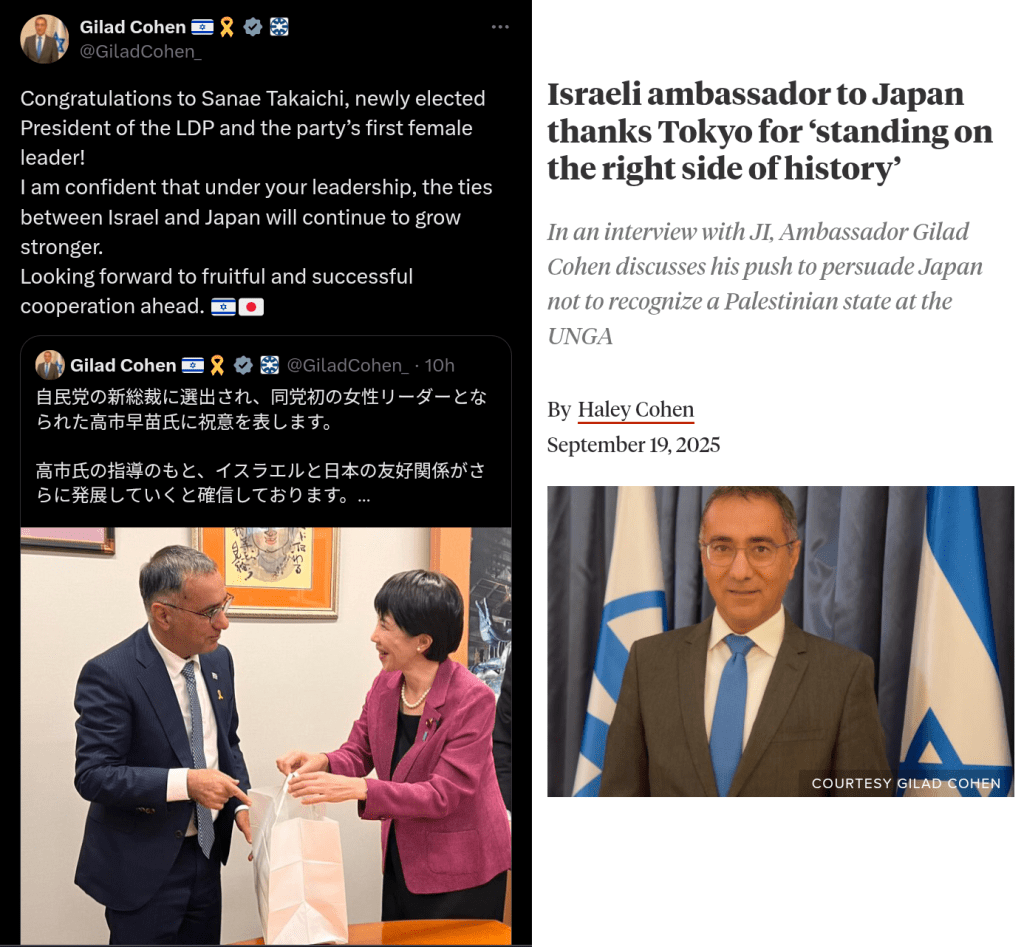
Sanae Takaichi, a conservative politician and protégé of the late Shinzo Abe, became Japan’s first female Prime Minister on October 21, 2025, following her election as leader of the Liberal Democratic Party (LDP). She succeeded Shigeru Ishiba after the ruling coalition lost its parliamentary majority in recent elections.
However, due to recent political statements, Japan’s PM Sanae Takaichi
China Tensions: Her Taiwan comments have strained ties, prompting Chinese threats,
 OSNT Corporation